
Teaching Money Management
When my children were young I found a book called “Teaching Your Children Values” by Linda and Richard Eyre, which inspired the checkbook system that I have been using with my kids for years! Here’s an overview to get you started.
1. Set up a job system where they get paid for doing their chores.
It can be as simple as 5¢ for making their bed and brushing their teeth. They need to understand that how much they are paid is based on the work they actually do. Sometimes it takes a little time for this to kick in, so be patient and be consistent. In the beginning we had several weeks where my kids didn’t earn anything.
2. Be sure to pay them enough so they can actually buy something they want.
Kids may need a little motivation. When they recognize that they can buy something that they want, it changes everything.
I will sometimes pay my older kids $5/hour to help me deep clean or organize large projects, etc. When they are wanting to buy something, a little extra cash can be quite motivating.
I realize, for older kids
this might be a little more difficult if you’re just starting now, but do what you are able to do and what works best for your family. The key is to be consistent and to let them have control of their money.
3. Pay them every single week without fail.
You will need three things for this: money, a check register, and a notebook where you keep track of everything. I have found it is was always good for me to keep my own record, and reconcile everything each payday.
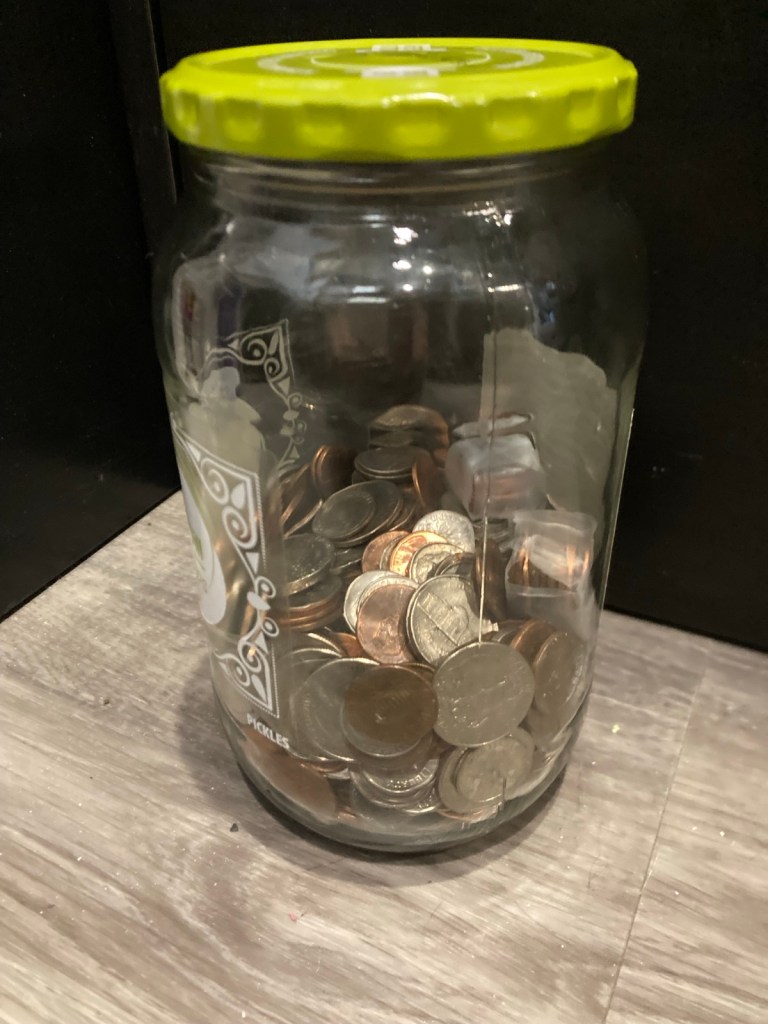
The money. We put everyhting in a pickle jar. I went to the bank and got $20 in small change, and that lasted for a LONG time.
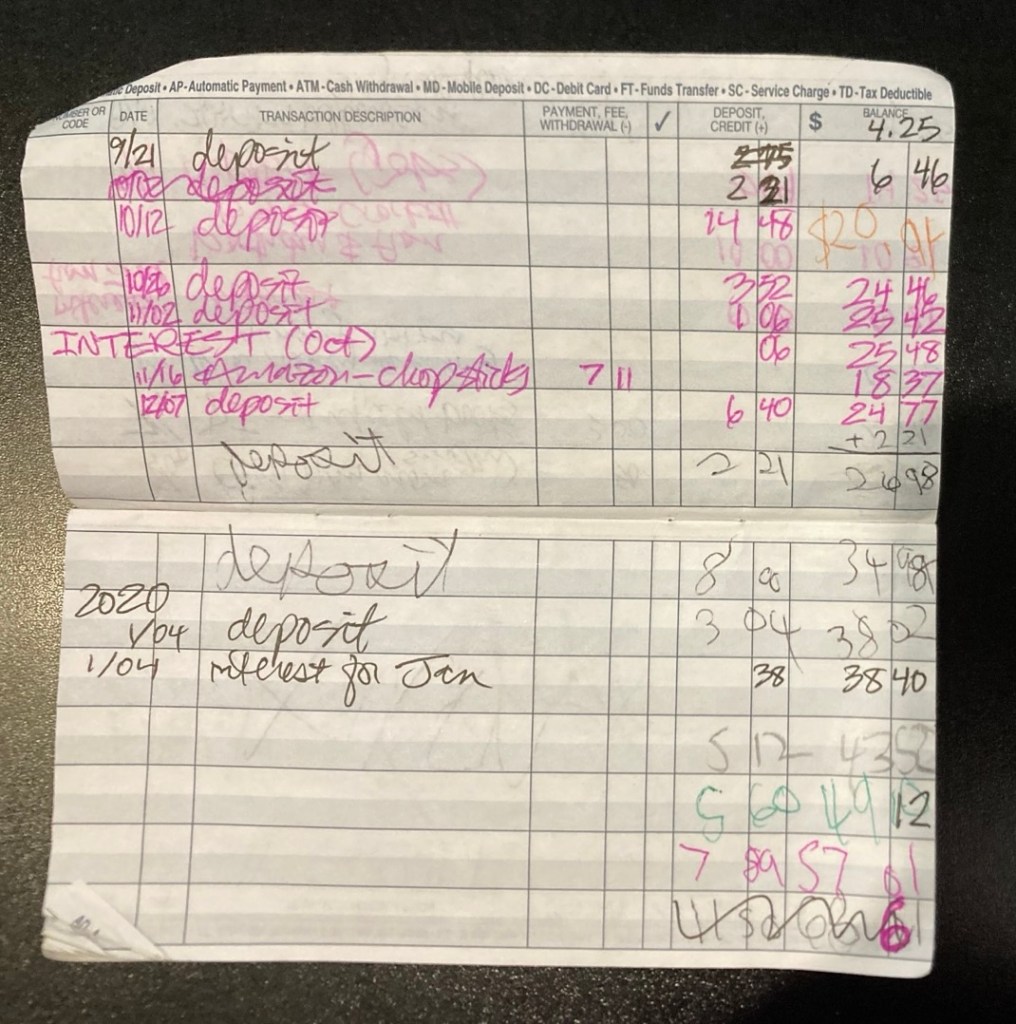
A check register. You can pick some up from the bank, or download a printable copy here. This is where your child keeps track of their money.
Have them write down everything: job money, birthday money, spare change they want to save, etc. Teach them how to use the check register. This is where the accountability comes in. If they write down how much they have, they know how much they can spend.
If they don’t know how to write yet, you can write for them, but they must be present and following along as you explain what you are doing.
A notebook: nothing fancy. This is where I keep MY record (just to make sure nothing is forgotten). I found that it worked well to log each child’s transactions on a separate page. In the image you can see the post-it notes that I used to separate them into individual sections.
At the top of every page I include the date, amounts added, amounts subtracted, and a running total. The notebook total should match with their checkbook total after payday each week.

4. Donations & Saving
Every payday I have my children set aside 10% for charitable donations and 10% to a savings account that I keep track of, and that they can’t access until they are 18. This teaches them early to get into the habit of giving and saving (something that took me a long time to learn!).

5. Take them shopping
I know it can sometimes feel overwhelming to take children to the store, but when they have money to spend they are excited to go! I try to put the responsibility on them for the choices they make with their money. If they have the money for something I will buy it. I do have to admit that buying junk food for them really was hard for me, but it was not very often, and I wanted them to feel what it was like to actually have a say in what they spent their money on. To each his own, right?
Whenever you are going to the store you will need to remind them to bring their checkbooks at first. If they want something at the store simply ask,
“Did you bring your checkbook?”
This is where the magic happens.
If yes, and they have enough $, then I buy it for them. I have them write down the transaction in their checkbook (usually right there in the store, or in the car afterwards). Positive reinforcement!
If they do NOT bring their checkbook, I just tell them, “Sorry. Next time you’ll need to remember your checkbook.” If they give me an excuse about why they forgot, I explain that I always have to bring my money, and next time they will need to remember. Then make sure you have a “next time” soon.
NOTE: If they had been consistent at bringing their checkbook and they forget (because sometimes we stop at the store without intending to), I will usually charge them 25-50¢ interest to buy something for them, IF I know they have the money in their checkbook. As my kids got older they would charge interest to their siblings if one of them forgot their checkbook and the other bought something for them.
You have to learn about interest sometime, right?
6. Interest
Another thing we did to teach them about interest was to pay them a very small percentage, quarterly, on the money they left in their checkbook. This helped to encourage them to keep the money in their checkbook, rather than spending it. There are a lot more details in the Eyre book!
“But what if I don’t have extra money!”
Do what works with your budget, but I’m not talking about big amounts. My children were 3, 5, and 7 when we started, and would get anywhere between 10¢ to $1 a week. But, the small amounts add do up, and wouldn’t paying those few cents be worth having a peaceful shopping trip? 😉
The rewards are definitely worth it!
Hang in there! You’ve got this! It really does help them in the long run. Looking back, 10 years later, my children are very money conscious, and I have even had them say “THANK YOU” for teaching them about money. One of those rare rewards as a parent. 🩷